Are GVSU athletes just winning games–or building futures?
It is February of your senior year in college and things are getting real. All Tom McNelis has known his whole life is basketball. The practices, workouts and games are non-stop, and you just fit everything else in your life around it. Now, it’s all about to come to a stop. But what now? No more 7:00 AM practices, lifts or shootarounds. No more study tables, meetings with coach or manager check-ins. It’s time to get a “real job” and leave everything else behind, but how? Where would you start? This is the reality for graduating senior Tom McNelis. He is approaching graduation quickly, but has no idea what will happen after he crosses that stage.
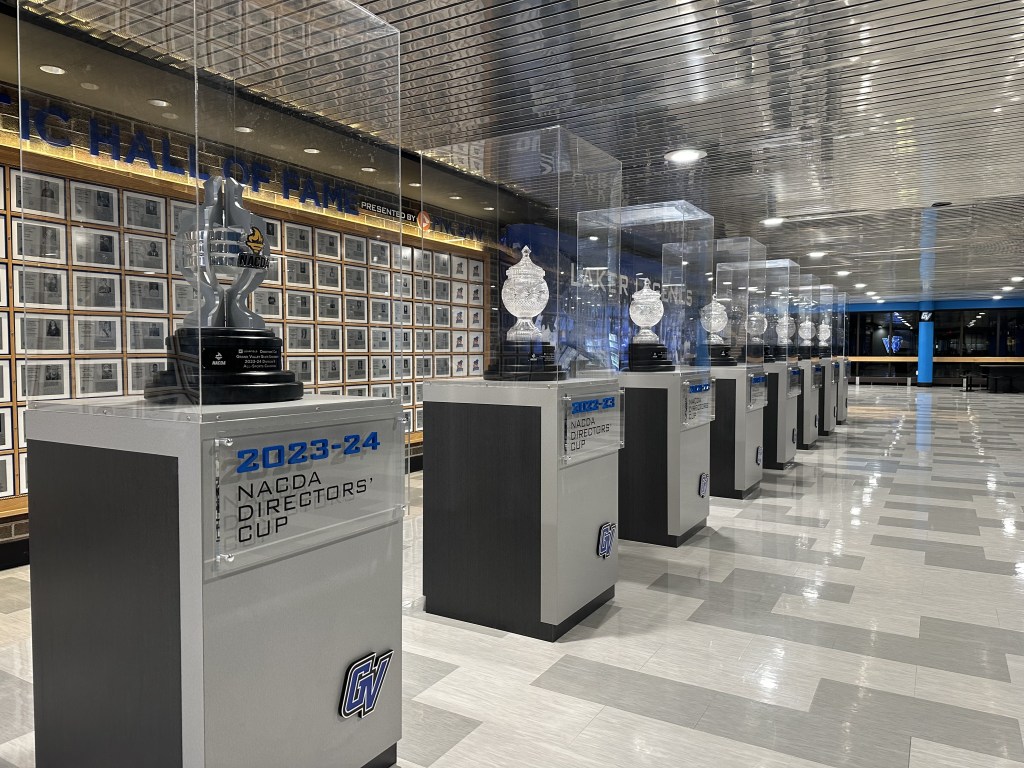
For athletes like McNelis who feel unprepared for life outside of sports, universities have a responsibility to bridge the gap, preparing students for both athletic success and their future careers. GVSU athletics have historically been known for their excellence. The university has won the Directors Cup as the best NCAA Division Two athletic program in the nation across all sports 16 times in the past 19 years. Many student-athletes attend Grand Valley with a goal of becoming a National Champion; knowing it is within reach. Unfortunately, Walter Moore’s departure and GVSU’s failure to replace him up to this point left a noticeable gap in GVSU’s support for student-athletes’ career readiness, leading some to wonder if GVSU’s commitment to excellence extends beyond athletic accomplishments. McNelis transferred to GVSU last year from a community college and this year he will graduate with a degree in Supply Chain Management.
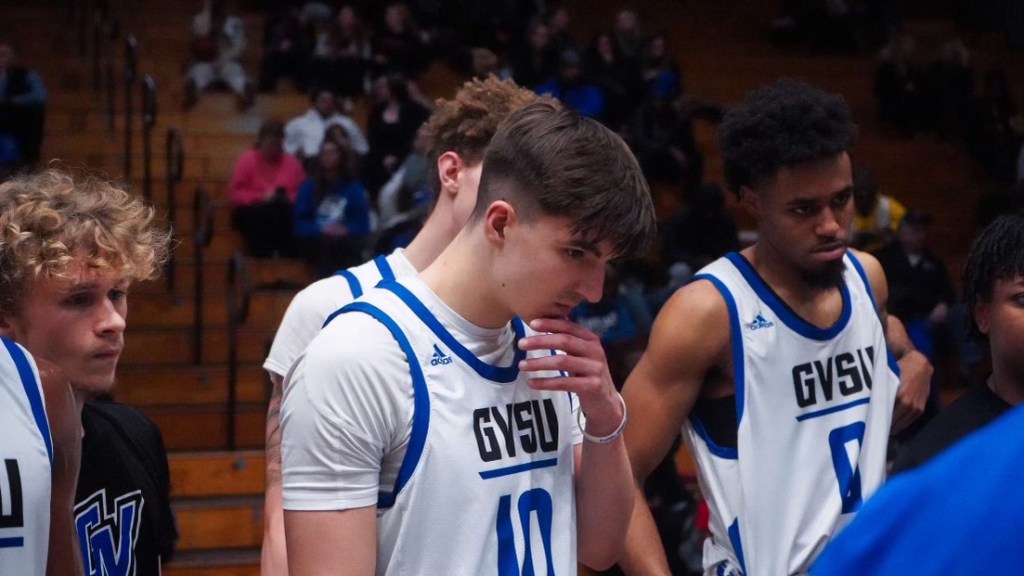
Although the major is broad, next steps are still unclear.
“I’m looking for a job after graduation, but I don’t really have any concrete direction,” explained McNelis. “I don’t know if I can even get a job right now and nobody’s helping me, it’s kind of just all on me”.
According to Associate Athletic Director Keri Becker, GVSU aims to counter those fears that McNelis conveyed. She emphasized the importance of empowering student-athletes for their futures’ outside of just being athletes.
“In the end, I want every student athlete to say that their student-athlete experience prepared them for what was next, whatever that may be, and give them the confidence to believe they can do anything they want.” said Becker.
To do this work at Grand Valley State University, Walter Moore created the Office for Student-Athlete Welfare and Development in 2017 to help student-athletes figure out what they want to do after graduation and how to get there. But Moore retired last August, and crucial parts of the program dissipated into nothing. Moore was proud to connect current student-athletes and recent alums with various employers and internships. At the conclusion of the 2023 school year, he was able to connect student athletes with representatives from Stryker, Fifth Wheel Freight, HexArmor, Mass Mutual (jobs/internships), Athletes to Career, Balfour and others.
This Office was committed to specifically cultivating critical life skills which will help prepare student-athletes for life after sports. What made GVSU’s special was Moore himself. Many student-athletes who got the chance to know him, knew him for being the guy with connections.
“If a student-athlete was struggling finding what they wanted to do or where to go, the easy answer was, go talk to Walter Moore,” said fifth-year graduate student Scott Spanstraa who was an intern for Moore. “And more often than not, he could set them on the right path.”
Prior to his departure, Judith Essemiah was one of many students that utilized Walter’s resources. Essemiah is a GVSU alum that currently holds the position of a research assistant at the Massachusetts Institute of Technology (MIT) in the Department of Neuroscience. Moore introduced Essemiah to a GVSU alum while she was searching for an internship that got her heavily involved in research.
“Without that research experience, I would not have been able to get this job at MIT,” Essemiah explained. “He has been instrumental in my development as a person, as an athlete but also as a working professional.”
Moore explained that upon his departure, his many responsibilities were not all directly passed to one individual.
“It wasn’t determined what was going to happen with my job, and I’ve since heard that they’re not going to do anything,” said Moore. “It’s going to just be kind of dissolved among everybody else.”
Administrators state that that university will not fall short and that the ball is moving forward in the hiring process, but Moore is a unique individual that is difficult to replace.
“(We) make sure athletes have the resources they need to thrive here in their academic career, and make sure they get over the finish line,” said Myesha Gholston who is the Director of the Laker Academic Success Center.
Gholston explained that in the Laker Academic Success Center they are the ones that athletes can stop in and see on a day to day basis if something isn’t going well in a class or with a professor. With the office’s main focus being academic advising, any class related issues are to go through them. The “finish line” that she is referring to, is graduation.
Although this center provides advising and academic support for over 600 student-athletes across campus, there was nothing quite like the Office of Student-Athlete Welfare and Development (SAW-D) that Moore created.
Moore assisted approximately 200 students in his first year in 2017. In just the fall of 2023 Moore had 162 individual appointments with student-athletes. He worked a lot with students on resumes and cover letters, but wrote more letters of recommendation than he can count. Many student-athlete lives were touched by Moore and it was reinforced with close to two decades worth of positive reviews from his supervisors. Through a Freedom of Information Act (FOIA) request, in multiple evaluation notes Becker applauded Moore’s efforts as a professional and leader of students in different spaces. Despite the positive evaluations, Moore felt that his program was not prioritized and certainly wasn’t given the financial bandwidth that it deserved.
“One of the things that really sort of didn’t really sit well with me was, here’s a job that could grow exponentially, and I saw the potential for growth, but I was never really allowed to, or had the opportunity to move in that direction,” Moore stated.
Becker stated that she was unsure exactly where Moore was coming from in terms of being prohibited to do all that he desired, but she did state that supporting Moore with more staff members wasn’t a priority.
“Were we going to hire another person under Walter? No, because my priorities were hiring in some other areas” Becker stated. “I’m giving you just a scratch in terms of my decision making. We can’t do it all at once”.
She emphasized the importance of hiring for the new men’s and women’s wrestling programs, new athletic training staff and staff for game operations on campus.
With the office being a solo effort, Moore’s frustrations lay in the fact that the work for the office was only him and the importance of those tasks were not always apparent to other administrators. As a result, he was often pulled into other areas of the athletic department such as Name Image and Likeness (NIL) to help out instead of making his role all that it could be. As of last year, Becker hired the Director of Athletic Inclusion as a result of a grant. This role was supposed to be an extension to Moore’s office, but after just one year he left the university as well.
Derrick King was the Director of Athletic Inclusion for the 2023-2024 school year before he disclosed that he was leaving in the fall of 2024 for a higher paying opportunity to be a resource for a larger pool of students at Muskegon Community College.
“It seemed like not a lot of people knew the extent of what he even did because of how much he was on his own,” Spanstraa explained. “Not a ton of support from other administrators I would say. ”
Becker made it clear that she was aware of the impact that Moore had on student-athletes, but there is no way to “duplicate” him. While there were no plans to expand his department staff, they looked into opportunities for creating internships or a Graduate Assistant position to expand Moore’s impact that way.
While a lot of Moore’s tasks were dispersed among other staff members upon his departure, Spanstraa was certain that one of the things that “died off” were his connections and helping student-athletes finding jobs and internships. Becker stated that there are still resources to fill the void of Walter’s position.
“We have the Career Center, we still have academic advising and a lot of what Walter was doing was happening through academic advisors.” Becker stated. “Walter was just where they’re missing a little bit more one-on-one and hands on (approach).”
There are a number of other division two universities across the country that offer extra support for student-athletes. Lee University in Tennessee offers a Director of Student-Athlete Welfare and Athletic Counseling, focusing on mental health and the overall well being of athletes. Purdue University Northwest employs an Assistant Director for Student Success, focusing on academic performance and career readiness for athletes, and the University of Mount Olive features a Director of Student-Athlete Development to prepare athletes for life beyond sports through academic and professional support.
The Mount Olive Director Thomas Capers Jr., was an intern under Moore in 2019 in the GVSU SAW-D office. Capers Jr is further confirmation that Moore’s work has carried on with students in their own professional endeavors. Without these impactful individuals like Moore and Capers Jr., things can go drastically wrong for both the student-athletes and the university.
Across the country, there have been instances where student-athletes have sued the institution for not providing them with the education they were promised as being both a student and an athlete. In 2013 Michael McAdoo filed a Class Action lawsuit against the University of North Carolina alleging that he was deprived of a legitimate education while being a collegiate football player for the university. UNC allegedly systematically funneled its football student-athletes into a curriculum of fake classes which never met and which were designed for the sole purpose of providing enrollees high grades. In turn, the university maximized the number of student athletes that were eligible to play which improved the chances of athletic success and increased the revenue and reputation of the university.
GVSU’s commitment to academic integrity and proper career preparation for student athletes prevents the university from falling into a similar situation. Becker’s commitment to GVSU is apparent, but her plans to fill Moore’s role are not as clear.
“We’re not going to find another Walter, but yes, we’re going to fill that role,” Becker stated.
She explained that there is currently a group of administrators that are doing an evaluation analysis of what GVSU student-athletes need and where they need support. The next step would be tailoring a position to fulfill those needs. As a result, a role with the title “Office for Student-Athlete Welfare and Development” may never exist again. With two vacant roles for this office and the Director of Athletic Inclusion, the athletic department is tasked with figuring out what to do with these positions.
“We have a committee of people that are looking at both of the positions to figure out what the gaps are, and how we can use these two roles,” Becker said. “How can we tailor positions to fill those needs and what might it look like?”.
The timing of Becker’s plans to fill this role by the spring raises concerns about the implications for current GVSU seniors set to graduate in December or April. Gholston emphasized that this will require seniors to be more proactive in terms of planning out their futures while still in college.
“It is going to take seniors to go to their resources,” Gholston stated. “they’re gonna have to look outside of the box to get the help that is right here for them, but we have the resources. The Career Center is wonderful”.
This may sound simple, but it isn’t as black and white for certain sports that are already spread incredibly thin. For McNelis, he explained that in his time here so far, he hasn’t had the opportunity to search for an internship or even ask for help with all of the demands of collegiate basketball.
“I know I could have went to the Career Center for that, but it’s hard. Like I said, it’s hard to find the time outside of athletics and academics,” said McNelis.
Gholston stated that if students just come to her or another advisor, they will be directed to who would be best to help whether that’s the Career Center or just a GVSU alum.
Since the creation of the SAW-D Office in 2017, Moore has been persistent about the growth of this office for one reason; the student-athletes. From Moore’s understanding, GVSU began to go in a different direction that he was not comfortable with the pace of. In his final months of employment he found himself working late hours that from his perspective, were not appreciated by Becker.
“I said to myself, you put this on me, you asked me to do this and I took it on. Now when I want to take time off, I can’t. Moore stated. “That is when I said enough is enough”.
Moore admitted that while he would miss the students, it was time to move on. As GVSU evaluates how to reshape the vacant role(s) to supporting student-athletes, the question remains whether the new positions will ever compare to the work that Moore did.
“It’s a serious void. I think that as an athletic department we should be very strategic in who we place in that role because it needs to be a person that can develop student-athletes where they are and also develop the community and alums to work with our students.” Gholston stated.
 Melia Williams Portfolio
Leave a comment